

Editor's Note: This post was originally posted in March 2018 and has been completely revamped and updated for accuracy and comprehensiveness in March 2026.
If cleaning always feels like it takes longer than it should, your effort isn't the problem. There's a good chance it's the tools and products you're working with.
A well-thought-out cleaning kit helps you move through your home more efficiently. When the right tools and products are within reach, you avoid doubling back, re-cleaning surfaces and scrubbing harder than necessary.
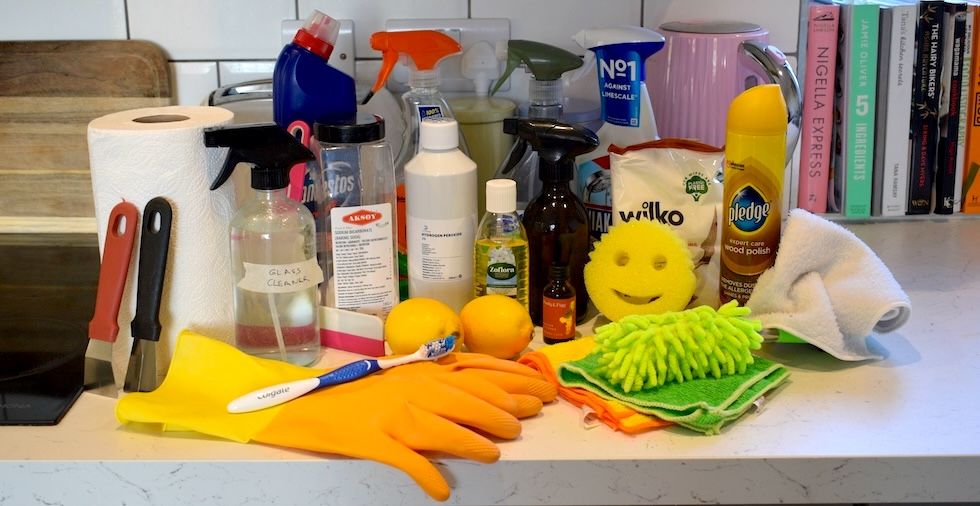
Today, we're going through exactly what belongs in a practical home cleaning kit. These are the items that genuinely make cleaning easier, quicker and more effective over time.
By the end of this blog, you'll be ready to build your perfect cleaning kit, and you'll know the one product we can't live without! We've made it super easy for you to get started by linking to all of the products mentioned.
Watch the video
Essential cleaning tools
One tool doesn't fit all. You wouldn't scrub a shower screen with a toothbrush or dust a table with a sponge. Here's what you actually need.
1. Microfibre cloths
Paper towels are slowing you down! Kitchen roll seems convenient, so most people reach for it automatically. The trouble is, it doesn't actually grab dust and grease very well. It tends to push dirt around, break apart quickly and get replaced over and over again.
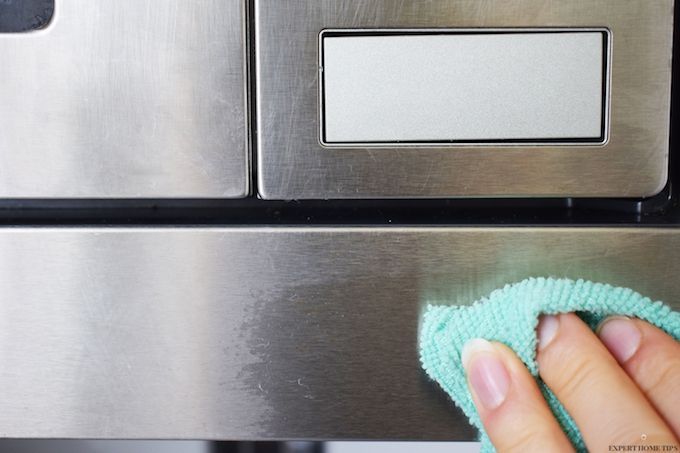
Microfibre cloths work differently. The fibres are extremely fine and designed to trap particles rather than just move them. That's why they perform so well on kitchen counters, bathroom surfaces, mirrors and taps.
They're reusable, durable, and far more economical in the long term.
It's also worth keeping one white microfibre cloth specifically for stains or lighter fabrics. There's no risk of dye transfer, which makes it safer for carpets and upholstery.
Switching to microfibre is one of the simplest ways to improve your cleaning kit and save money over time.
2. A toothbrush
Most people throw away this small cleaning tool without realising its potential!
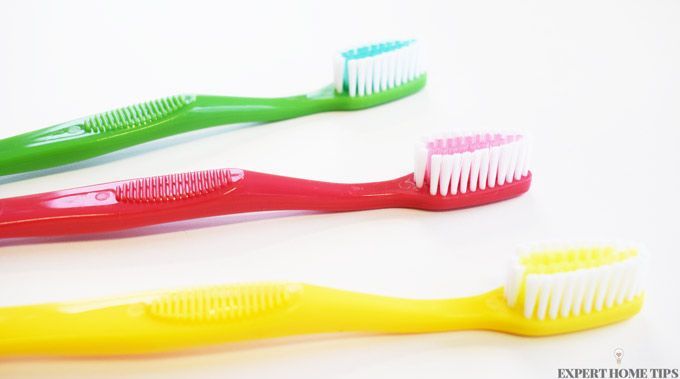
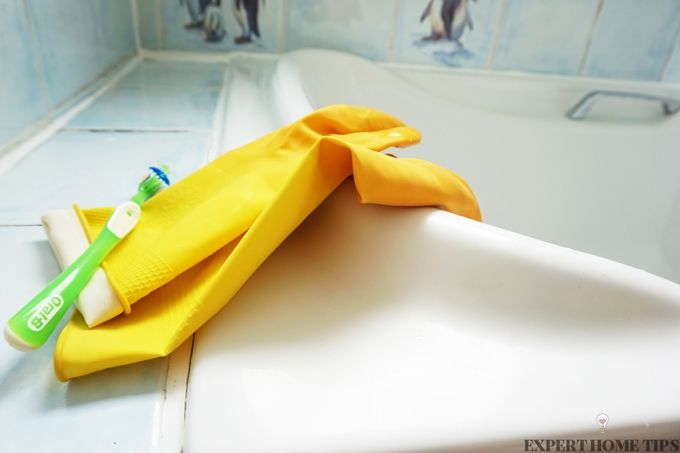
Old toothbrushes rarely get a second thought, yet they’re perfect for detailed cleaning. Their compact head makes them ideal for grout lines, around taps, shower door tracks, and any narrow space that larger brushes can’t reach properly.
When cleaning feels fiddly or awkward, it’s often because the tool is too large for the job. Keeping a couple of old toothbrushes in your cleaning kit solves that instantly.
3. Gloves
If your hands feel dry after cleaning, it's because of this.
Frequent exposure to cleaning products can gradually irritate and weaken the skin barrier. A good pair of rubber gloves protects against harsh chemicals and prolonged contact with water, allowing you to clean thoroughly without discomfort.
Find the perfect size, and wearing them will be a bit less of a chore! A good quality pair won’t tear easily.
You can go one step further and have colour-coded gloves for the kitchen and bathroom.
4. Spray bottles
Cheap spray bottles eventually cause more hassle than they’re worth.
If you mix your own cleaning solutions, you may have noticed that some spray bottles start to leak or fail over time.
Acidic mixtures such as vinegar can weaken lower-quality plastics, leading to cracked bottles or faulty triggers. Investing in chemical-resistant spray bottles prevents that frustration.
Labelling them clearly also keeps your cleaning kit organised and avoids confusion.
5. A good vacuum
Cleaning feels harder when dust isn’t removed properly first.
If loose dirt and hair are left behind, wiping surfaces often just spreads them around. A dependable vacuum suited to your flooring makes every other step easier. Whether you have carpets, hard floors or pets, strong suction and good manoeuvrability improve your overall results.
A reliable vacuum supports the rest of your cleaning routine more than most people realise.
Leave a comment to let us know what vacuum you have and if you like it!
6. Sponges
Using one sponge everywhere is a mistake most homes make.
It’s easy to grab whichever sponge is closest, but using the same one in both the kitchen and bathroom increases the risk of spreading bacteria.
Keeping separate sponges for different areas is a simple but effective change.
Dual-texture sponges (like the Scrub Daddy) add versatility, staying firm in cold water for tougher scrubbing and softening in warm water for lighter cleaning tasks.
Replacing them regularly keeps your cleaning kit hygienic and effective.
7. Cleaning wipes
Single-use wipes can be helpful for high-contact areas like toilet seats, where reducing cross-contamination matters.
However, they can be wasteful and should never be flushed, regardless of what the packaging suggests. Keeping them for occasional use, rather than daily cleaning, tends to be the most practical balance.
Leave a comment to let us know where you stand on this debate.
8. We’re never without a scraper tool!
Some residue won’t shift no matter how hard you scrub.
Soap scum, burnt-on food and paint splatters can cling stubbornly to surfaces.
Luckily, we’ve found a seriously underrated bit of kit. A razor blade scraper, used carefully on suitable surfaces like glass or tiles, removes that build-up cleanly. Applying the cleaning solution first allows the blade to glide smoothly, and light pressure prevents scratching.
Replacing blades as soon as they dull keeps the tool safe and effective.
9. Paper towels
You might be surprised to see paper towel make the list.
Ok, we’ll admit it. Kitchen roll still has a place in your cleaning kit, just not for everything.
Reusable cloths handle most daily cleaning jobs, while paper towels are useful for absorbing spills or tackling particularly messy jobs.
Keeping a small supply offers flexibility without relying on it for routine cleaning.
TOP TIP: We find newspaper just as effective for buffing mirrors and windows. If you're an avid news reader, try using this instead of a paper towel to reduce your environmental footprint.
10. A squeegee
A five-second habit can dramatically reduce bathroom build-up.
Running a squeegee over shower glass and tiles after use removes excess water before it dries.
Over time, this slows limescale formation and reduces water marks, meaning less heavy cleaning later on.
It can even help lift pet hair from carpets when drawn across the surface.
11. Feather duster

Call us old-fashioned, but some tools are a classic for a reason.
You can’t beat a feather duster for high shelves, cabinets and ceiling corners. We love this telescopic microfibre one for a modern upgrade.
Working from top to bottom ensures that falling dust can be cleaned efficiently in a single pass.
12. Lint roller
Pet hair is easier to manage than it looks.
A lint roller provides a quick way to remove hair from sofas, chairs and clothing.
For households with pets, it’s particularly helpful for last-minute touch-ups before guests arrive.
They’re perfect for cleaning lamp shades, too!
Essential cleaning products
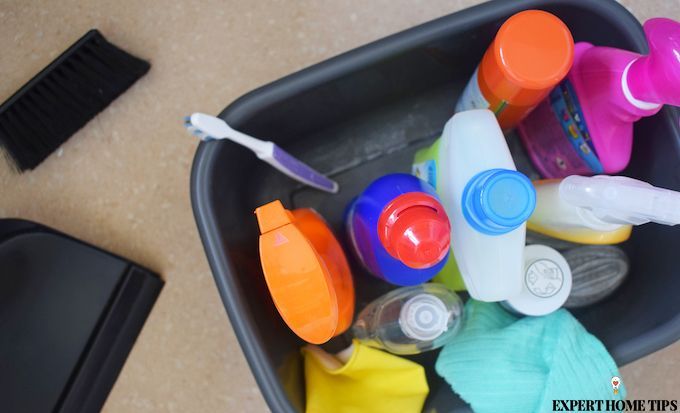
Now let’s look at the products that complete your cleaning kit. You don’t need an overflowing cupboard; a focused selection will handle almost everything.
1. All-purpose cleaner
One good all-purpose cleaner simplifies your routine. It’s in the name! Instead of switching bottles constantly, a reliable all-purpose cleaner lets you breeze from room to room.
Suitable for a wide range of surfaces, it reduces clutter in your cleaning kit and keeps your routine straightforward. Spray versions are convenient, while concentrated formulas often offer better value long term.
2. Glass & mirror cleaner
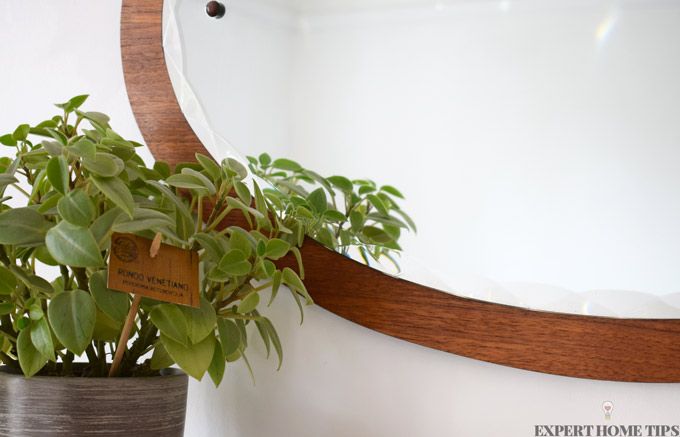
Streaky mirrors usually come down to what you’re using. You need the right formula.
A dedicated glass cleaner works well, or you can mix rubbing alcohol, white vinegar and water at home. The alcohol evaporates quickly, helping to minimise streaking.
Used with a clean microfibre cloth, it leaves mirrors and windows looking polished rather than smeared.
Next time, we’re sharing a product that makes your home smell AMAZING. You won’t want to miss it!
3. Disinfectant
Some areas of your home need more than surface cleaning.
Bathrooms and food preparation areas benefit from proper disinfecting.
Disinfectants are formulated to reduce bacteria and viruses when used according to instructions. Allowing the recommended contact time significantly improves effectiveness.
Used correctly, they add an important layer of hygiene to your cleaning routine.
Our favourite disinfectant is Zoflora, because it comes in a variety of beautiful fragrances.
4. Furniture polish
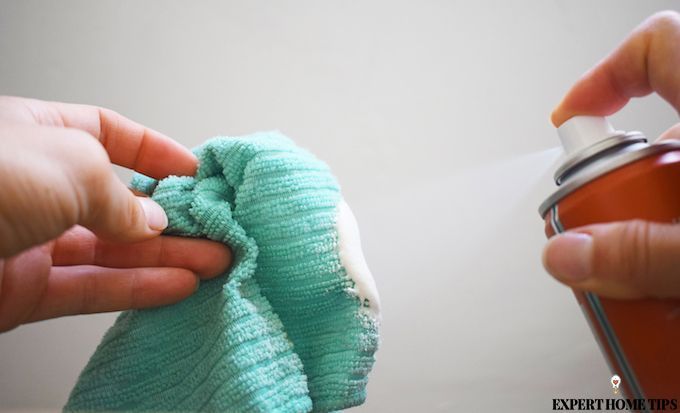
Wood furniture often looks dull because it needs finishing, not scrubbing.
After dusting, wooden surfaces can benefit from a spray of furniture polish.
It enhances shine, reduces the appearance of water marks and refreshes the look of furniture. Used occasionally, it maintains the overall appearance of wood, without overcomplicating your cleaning kit.
5. Limescale remover
Don’t spend hours scrubbing limescale when the right product can do it for you. In hard water areas, mineral deposits build up around taps and shower screens.
Acid-based removers dissolve limescale much more quickly than scrubbing alone. Commercial products act quickly, while natural acids such as lemon juice or vinegar can help with lighter build-up.
Allowing the product time to work makes a noticeable difference.
Here at Expert Home Tips, we often prefer using the humble lemon. Cut one in half and rub onto the limescale. Leave the juice to do its things for 30 minutes before wiping clean.
6. Washing up liquid
This is the one product we can’t live without.
It’s the one product we can’t live without.
Beyond the kitchen sink, washing-up liquid cuts through grease on bathroom sinks and shower tiles just as effectively.
Rinsing thoroughly prevents residue from remaining on surfaces. Its versatility makes it one of the most frequently used items in many cleaning kits.
7. Bleach
Powerful cleaners need to be used carefully. Bleach or hydrogen peroxide can be very effective for whitening grout and tackling mould.
They should always be used carefully and never mixed with other cleaning products such as vinegar or ammonia. Bleach and hydrogen peroxide should never be used together, as mixing strong chemicals can create dangerous reactions.
Reserved for specific tasks, they provide targeted cleaning power when needed.
Make sure you know how to get the bleach smell off your hands with the tips in our other article.
8. Surgical spirit
Sticky residue rarely responds to standard cleaners. Label glue, grease and crayon marks can cling stubbornly to surfaces.
Rubbing alcohol breaks down adhesive residue and evaporates quickly, leaving surfaces clean without a film.
A small bottle of surgical spirit often proves invaluable in situations where other products struggle.
And that’s it! A thoughtfully assembled cleaning kit supports efficient, consistent cleaning throughout your home.
Carefully choosing tools and products reduces unnecessary effort and improves results without adding clutter.
Let us know in the comments what’s in your cleaning kit!
What do you have in your cleaning kit? Let us know what you couldn't live without in the comments below.

I like to use a hairdryer on my silk flowers and use vinegar on a lots of sticky things.
We love using a hair dryer to blast dust from all sorts of things too Sharon. Great tip! :)
I have a soft blusher brush I keep for dusting delicate ornaments, which gets into all the intricate bits.
That's a fab idea, Jo!
Wooden cocktail sticks for getting into those REALLY hard to reach corners, particularly on cookers, cotton buds dipped in spirit vinegar or rubbing alcohol, are also useful for this (much better than sticking them in your ear) Don't forget to thoroughly rinse out your sponges and microwave them for a minute or so while still damp, to sterilise them for their next use - remember to let them cool before handling!! Microfibre cloths, while very effective, are not particularly eco-friendly when it comes to disposal, so perhaps bear that in mind.
Thanks for sharing those tips! Your home must be sparkling clean - it makes us want to deep clean with cocktail sticks now!
Sounds like far too many chemicals being used to me. My wife was using a cleaner a while ago and she said to me that it made a lovely smell of lemon in the house. It did but I thought real lemon would not smell that strong, so I tried some lemon cleaning a few weeks later as I always use lemon to clean my wooden chopping boards. You could only just smell it. So we never used that lemon smelling cleaner again. You have to remember you are breathing in those chemicals after using them.
That's very true, Trevor! Natural cleaning isn't for everyone, but we love it.
The most useful item in my cleaning kit is a plastic bowl scraper, ideal for picking up vomit from carpets if you have children or animals.
We've never thought of that, Angela! What a great idea.
I use small pieces of scrap paper to get between the keys of my keyboard, moving any crumbs, dust etc to the same side then taking them out, also turning the keyboard upside down and gently shaking it to shake out any loose dust and crumbs. Best to make sure the computer is turned off first!
Great idea! Have you thought about trying the sticky side of a post-it note for this? The stickiness will pick up any crumbs so you won't need to shake your keyboard about too much.
What can be used for general household items
Hi Cyndy! It depends on how you're hoping to clean the items. Would you be hoping to remove dust or more intense grime? I would ordinarily give items a clean with a dusting cloth dipped in a small amount of polish, but it really depends on the item!
I find that liquid hand soap is just as effective as bathroom cleaner for giving the bathroom basin a quick clean, especially combined with a plastic scrubby. Try it!
Could that end up being quite expensive?
What do you recommend for cleaning Lino floors?
The brand HG sells a vinyl floor cleaner, or you could make a floor cleaner with hot water, 250ml of white vinegar and a few drops of washing-up liquid.