

- What is a cast iron pan?
- What does it mean to season a cast iron pan?
- You will need
- How to clean a cast iron pan
- How to season a cast iron pan: simple steps
- How to remove rust from a cast iron pan
- Tips for looking after your cast iron pan
Cast iron pans are fast becoming one of the most popular pieces of cookware you can own. However, if you happen to have one in your kitchen, you need to know how to look after it. Fail to clean and, indeed, season it right, and you could end up with rust, uneven cooking, and a frustrating experience. So, what do you need to know to make sure you get these tasks right?
In this guide, we will cover everything you need to know to clean and season a cast iron pan. We will look at the basics of how to clean a cast iron pan after everyday use, how to season it properly, how to remove rust, and how to restore a pan that has seen better days. Whether you’ve just got a new pan or need a refresher, you’ve come to the right place.
What is a cast iron pan?
First things first, let’s talk about what a cast iron pan actually is. This is a pan made from iron that has been melted down and poured into a mould. It’s a thick and heavy piece of cookware that heats up slowly, unlike your standard frying pan.
Cast iron has no synthetic coating, so any non-stick properties come entirely from seasoning. If you have a cast-iron pan at home, it’s important to take proper care of it. Learning how to season it (and, of course, how to clean it) is a good start.
We also have a guide on how to clean a griddle grill, so check that out next.
What does it mean to season a cast iron pan?
Seasoning has absolutely zero to do with flavour. If you were picturing yourself pouring herbs and spices onto your pan, we’ve got some surprising news for you.
When it comes to seasoning a cast iron pan, what we’re actually talking about is a thin layer of polymerised oil that bonds to the surface of the pan through heat.
When people talk about a "well-seasoned" pan, they mean one that has built up multiple layers of this coating over time. If that has happened, the surface will look dark and feel smooth. On the other hand, a poorly seasoned pan will look patchy, feel rough, and stick to food.
Seasoning your cast-iron pan is a must unless you want your food to stick. However, there’s a real knack to getting it right. Next up, we will talk about what you need to do to first clean your cast iron pan and then season it.
You will need
Before you get started, you’re going to need some supplies. Here’s a quick rundown of the things that will help you with these two tasks.
Cleaning supplies
- Stiff brush
- Chain mail scrubber
- Paper towels
- Washing-up liquid
- Coarse salt
- Pan scraper
Seasoning supplies
- Canola oil
- Avocado oil
- Shortening (solid fat)
Equipment
- Oven
- Stovetop
- Foil
How to clean a cast iron pan
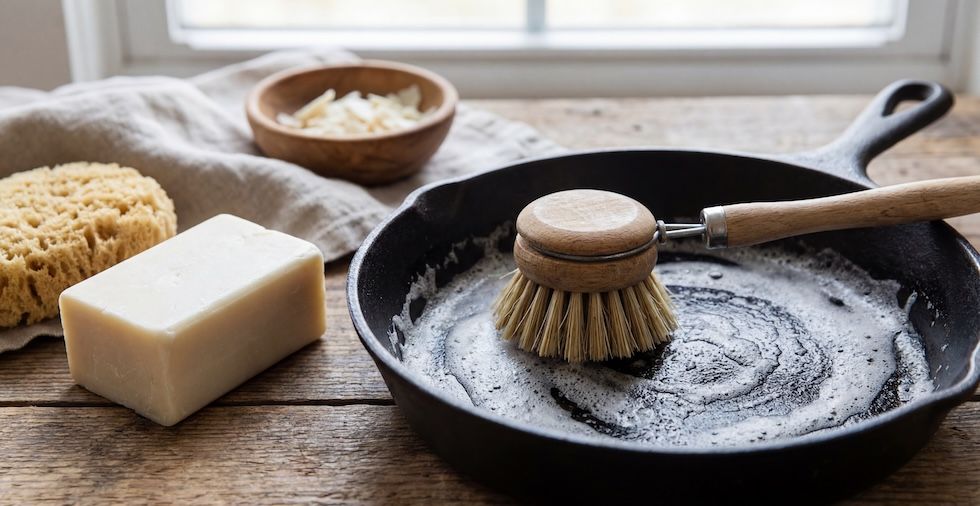
You should clean your cast iron pan each time you use it. It’s best to clean it while it’s still warm, so the residue hasn't set in yet. Remember this isn’t a deep clean. It’s something you should get into the habit of doing every single time you use your pan. Here’s what to do:
Step 1: Rinse the pan
Use warm water to rinse the pan and remove any residue. That includes food residue, oils, and sauces you have used during cooking.
Step 2: Brush away any excess
If there are some tricky pieces of food residue or anything else that won’t shift with a rinse, you can grab a brush or a pan scraper to get the job done.
Step 3: Use some salts, too
In cases where the brush or the scraper doesn’t do the trick, you might need to use something stronger. Coarse salt could help you along the way. You can add a tablespoon of it to the pan and then scrub the area with a cloth.
TOP TIP: Salt acts as a natural abrasive, helping you remove stains without damaging the pan's seasoning.
Step 4: Rinse the pan well
When you’ve done all of the above, rinse the whole pan and then dry it immediately. You can use a towel to do this, or put it on the stove at a low heat. Remember, drying your pan well prevents it from rusting. Don’t rush this part of the process.
How to season a cast iron pan: simple steps
When you’ve mastered cleaning a cast iron pan, the next thing you need to learn is how to season it. Here’s a quick tutorial that will help you get the basics right from the start.
Note: You should only season a cast iron pan when it’s new, after stripping an old seasoning, or after removing rust.
Step 1: Turn on your oven
First up, you’re going to need to preheat your oven to 230°C. While you’re waiting, make sure you’ve washed and fully dried your pan.
Step 2: Apply some oil to the pan
Next up, apply your chosen oil to the pan. You can use canola oil, avocado oil, or Crisco shortening, which are solid vegetable fats. Cover the inside, outside, and even the handle.
Step 3: Wipe off the excess
To season a pan properly, make sure the layer of oil is extremely thin. You can do this by wiping off any excess oil with a paper towel. Leaving too much on can lead to a sticky, uneven finish.
Step 4: Put the pan in the oven
Put the pan upside down inside the oven. You’ll want to use a sheet of foil on the rack below to catch any oil drips. Bake for around an hour, and then turn off the oven and let it cool.
Step 5: Repeat the process
For proper cast iron pan seasoning, you should repeat the process two or three more times. This will give you a sturdy base of seasoning for your cast iron pan.
How to remove rust from a cast iron pan
Over time, cast iron pans can become rusty. Rust happens when the metal is exposed to both moisture and oxygen. Removing it can be tricky. However, you can use a coarse salt scrub (like the one we described earlier), a steel wool scrubber, or a long vinegar soak.
If your cast iron pan is covered in rust, it’s important to understand that you may not be able to remove it all. If the entire surface of the pan is rusty, it may be beyond saving. While rust is generally not dangerous, it can leave a literal nasty taste in your mouth. Cooking with a rusty pan can leave a metallic flavour, which isn’t always the nicest when you’re trying to enjoy meals.
Tips for looking after your cast iron pan
Looking after a cast iron pan is essential if you want to keep using it for years to come. Here are some final tips you can use when you’ve got one of these in your kitchen:
Avoid cooking with acidic foods
Foods that are high in acid, such as lemon juice and tomatoes, can be dangerous for cast iron pans. These can strip the seasoning of your pan, which means that you will need to treat it more frequently. Whenever possible, avoid cooking these in your cast iron pan.
Store your cast iron pan properly
To keep your cast iron pan as safe as possible, you should store it in a cool, dry place. You might want to put a paper towel below it. You should also avoid stacking it if you can.
Tackle burnt-on food fast
If you burn food while cooking, make sure you clean it off your pan immediately. You should use either a pan scraper or warm water to remove any residue ASAP.
When you have a cast iron pan, how you treat it matters. Follow the advice we’ve shared in this guide on how to clean and season your cast iron pan. While it may sound like a lot of work at first, you should find that it keeps the cookware ready to use and helps it last longer.
Q&A
Did we miss something? Check out our frequently asked questions below.
What is the best oil to season cast iron?
You can use different types of oil to season a cast iron pan. Popular choices include avocado oil and canola oil.
Can you use soap on cast iron?
Yes, you can use mild dish soap or washing-up liquid on your cast iron. However, you should avoid abrasive cleaning products, especially those that contain acidic ingredients.
How do I know when my cast iron is properly seasoned?
When the cast iron pan is well seasoned, it will turn dark and develop a smooth surface. If it feels sticky or patchy, that means that the seasoning has not worked.
How often should you season a cast iron pan?
Typically, you only need to season your cast iron pan once or twice a year. However, if you’ve had to remove some rust, you might need to season it more often.
Got a question? Leave us a comment below!

Leave a Reply