

Editor's Note: This post was originally posted in September 2022 and has been completely revamped and updated for accuracy and comprehensiveness in June 2026.
Have you ever cleaned your laminate floors, stood back to admire the results, and wondered why they still don't look quite right? Maybe they're looking dull. Maybe there are streaks everywhere. Or perhaps they seem to get dirty again almost immediately.
If that sounds familiar, don't assume your flooring is worn out. In many cases, the problem comes down to a build-up of dirt and grime, along with a few common cleaning mistakes that stop laminate floors from looking their best.
The good news is that most of these problems are easy to fix. Today, we're sharing 11 simple tips that will help you clean laminate floors properly, avoid damage, and keep them looking great for longer.
Let's get started!
Watch the video
1. Remove dust and debris
Before you reach for a mop, take a few minutes to clear away any loose dirt on your floors.
Dust, crumbs, pet hair and grit can quickly build up on laminate flooring. If you start mopping straight away, you'll only move that dirt around and make the job harder.
Remove debris first using a soft-bristled brush or a vacuum that's suitable for hard floors.
If your floors are well overdue a clean, take a few moments to clean those hard-to-reach areas and remove dust that would otherwise be left behind around skirting boards, corners, and furniture. This simple step gives you a much better finish at the end.
Find out whether to dust or vacuum first in our other article!
2. Wipe up spills immediately
Whether you spill red wine on the floor or drop some food, you need to act fast.
If you leave these messes for too long, they could stain your laminate flooring for good. A cloth, paper towel or floor wipe is usually all you need.
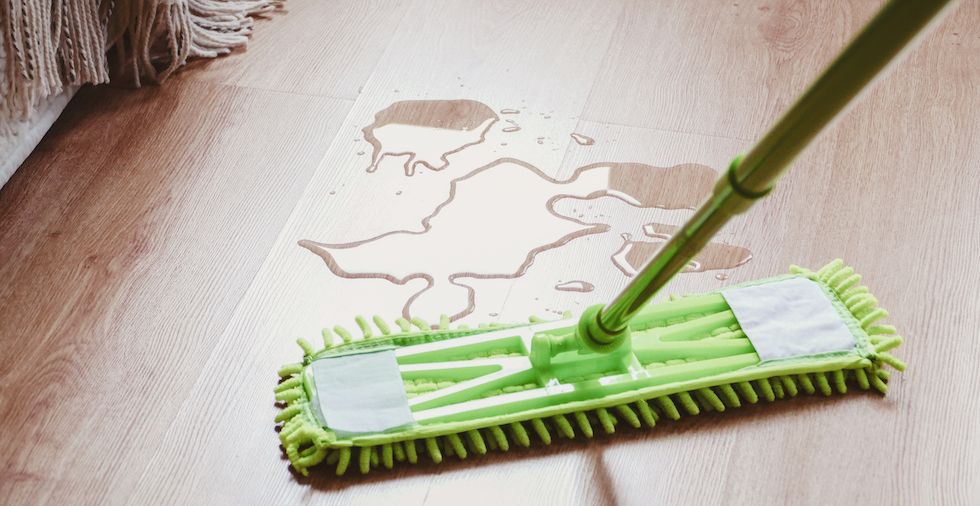
You should be especially careful with larger spills. If you spill an entire glass of water onto your laminate flooring, don't leave it sitting there.
Laminate flooring can absorb moisture around the joints and edges, which over time can lead to swelling or warping.
3. Deal with scuff marks early
Scuff marks are among the most common complaints about laminate flooring. The good news is that many of them are easy to remove if you tackle them quickly.
Start with a microfibre cloth and a small amount of laminate-safe cleaner. For more stubborn marks, a rubber eraser can help lift the scuff without damaging the surface. The longer scuff marks are left in place, the harder they can be to remove.
4. Choose the right tools
The best cleaning routine starts with the right equipment. When it comes to laminate flooring, microfibre is hard to beat.
Microfibre mops are designed to trap dust, dirt and grime rather than spreading it around the floor. They also do a great job of lifting debris with very little moisture, which is ideal for laminate flooring.
It's less likely to leave lint or streaks behind, helping you achieve a cleaner finish with less effort.
We didn't think a mop could make much difference, but we've been using the Easy Gleam mop recently, and it's really made cleaning feel like less of a chore.
The two-chamber bucket helps remove dirt and excess water before you continue cleaning. Now, our laminate floors aren't left soaking wet, and they dry much quicker afterwards. That's particularly important with laminate flooring because, unlike some other floor types, it doesn't respond well to excessive moisture.
And that brings us perfectly to the next tip!
5. Avoid using too much water
This is one of the biggest mistakes people make when cleaning laminate flooring. Many homeowners assume they can clean laminate the same way as tile flooring, using plenty of water and a soaking-wet mop.
Unfortunately, that's often where problems begin. Laminate flooring doesn't respond well to excessive moisture. Instead, use a lightly damp mop and avoid leaving water sitting on the surface.
This is also why steam mops are generally best avoided. While they work well on some surfaces, they introduce a lot of heat and moisture, both of which can potentially damage laminate flooring over time.
6. Choose the right cleaner
When looking for the best way to clean laminate flooring, it helps to have a cleaning product you trust. Choose a cleaner that's designed for laminate or hard floors and always follow the manufacturer's instructions.
The goal is to remove built-up grease and grime without leaving behind a residue that attracts even more dirt. It's also worth avoiding bleach and other harsh chemicals, which can damage laminate flooring.
Some homeowners use diluted vinegar solutions instead. While this can work, dedicated floor cleaners are often a better option if you're concerned about protecting the finish.
7. For a better result, clean in smaller sections
One mistake that often leads to streaks is trying to clean the entire room at once. Instead, work in smaller sections.
This gives you more control, helps prevent moisture from sitting on the floor for too long, and makes it easier to spot any areas you've missed.
It's a simple adjustment, but it can make a surprising difference to the final result.
8. Don't spread dirt around with a filthy mop
If your mop head is dirty, you're often just moving grime from one part of the floor to another.
As you clean, take a moment to rinse your mop regularly or swap out dirty mop pads if you're using a reusable system. That's another great feature of this new mop we've been using.
We know it sounds obvious, but if the cleaning water starts looking cloudy or dirty, be sure to change it.
A clean mop picks up dirt. A dirty mop starts to spread it around.
9. Once you've cleaned, dry your floors immediately
When you've finished mopping, don't just leave the floor to dry naturally.
Instead, use a clean microfibre cloth or dry mop to remove any remaining moisture. This helps to prevent streaks, reduces the risk of moisture collecting around the edges, and leaves the floor looking cleaner overall.
10. Don't wait until your floors look dirty
One of the biggest reasons laminate flooring starts to look dull is that many people leave it too long between cleans. By the time dirt becomes obvious, grease and grime have often been building up for weeks.
A quick sweep every few days and a regular deeper clean can make a huge difference. For many households, a thorough clean around once a month is enough to keep laminate flooring looking its best, although homes with children and pets may need more frequent attention.
11. Protect your floors from future damage
The easiest way to keep laminate flooring looking great is to protect it in the first place.
Try to avoid wearing outdoor shoes inside the house, place doormats at entrances to catch dirt before it gets tracked into your home, and consider using furniture pads beneath tables, chairs, and other heavy items. We like to cut the furniture pads to shape, so they fit any piece of furniture.
These simple habits can help prevent scratches, reduce wear and tear, and make cleaning much easier over time.
If your laminate flooring is looking dull right now, don't assume it's permanently damaged. In many cases, it's simply a build-up of dirt, grease and residue that can be improved with the right cleaning routine.
This guide has looked at the best way to clean laminate flooring. You don't have to spend loads of time on this household chore. However, if you stay on top of it, you will find it easier than you might imagine. So why not get started on it today?
Q&A
Did we miss something? Take a quick look at our frequently asked questions below. We've shared some expert answers just for you:
Can you steam a laminate floor?
While steam mops can be great on some surfaces, you may want to avoid using them on laminate flooring. These tend to hold a lot of moisture, damaging your floors.
Can you vacuum a laminate floor?
While you can vacuum your laminate floors, you might want to avoid doing so. You can easily scuff or mark your flooring using a vacuum cleaner. It is much better to sweep and learn how to mop laminate floors instead!
Can you put bleach on laminate flooring?
No! You should avoid using bleach — or any products that include bleach! — on laminate flooring. This type of chemical can damage laminate. Instead, you should go for a milder and more natural effect.
Can I use vinegar on laminate floors?
If you want to make your homemade cleaner, you can use vinegar. While this substance is acidic, if you mix it with some water, you should have no problem using it. However, remember that it can have a strong smell if you use it in your home.
Why does my laminate floor look dull?
If you haven't cleaned your laminate flooring for months, it will start to look dull. That is because there is a build-up of grime and grease. So give it a deep clean to make it shine!
How do you remove candle wax from floors?
To remove wax from flooring, grab a pack of ice from the freezer and apply it directly to the area. The plan is to freeze the wax, so it is extra hard and will snap off. After doing that for a couple of minutes, grab a plastic scraper and gently remove the wax from the laminate floor. Clean as above.
Got a question? Leave a comment below!

THE PINK STUFF BRILLIANT AMAZING
It's great!
Great tips! I always make sure to use a damp (not wet) mop and avoid harsh chemicals on my laminate floors. The advice about tackling scuffs with a little rubbing alcohol is a game changer.
Thanks for sharing! We're glad you found the tip useful, and keeping the mop damp rather than wet really is one of the best ways to protect laminate flooring.
Great tips! I've found that using a slightly damp mop with a pH-neutral cleaner works really well on laminate. Avoiding excess water is key to preventing warping.
Thanks for sharing! We completely agree, using as little water as possible is one of the best ways to keep laminate flooring in good condition.